Insights
10.4.2026
Miikka Kataja
Best HRIS for startups in 2026: Top 7 tools for 10–75 person teams
Comparing the top 7 HRIS tools for 10–75 person startups in 2026 — setup time, Slack integration, performance management, and pricing transparency.
At 10 to 75 people, most companies still run HR in a spreadsheet. Time-off in a shared Google Sheet, employee records scattered across Notion docs, performance reviews postponed until someone complains. It works, until it doesn't. HR.com's State of HR Technology report finds that while 85% of organisations now use some form of HR technology, adoption among small businesses sits at just 79%, compared to 91% at enterprise level. Most platforms are built for companies that already have a dedicated HR team and an implementation budget. At 10–75 people, neither is guaranteed.
Finding the best HR software for your startup is not about finding the most powerful platform. It is about finding one you will actually use: something that sets up without a three-month implementation project and handles the basics reliably as headcount grows.
TL:DR
- The right HRIS for a 10–75 person startup is not the most feature-rich option. It is the one that sets up the fastest and handles the fundamentals without ongoing maintenance.
- Most HRIS tools require a sales call before you can see pricing or start a trial. A few do not.
- Performance management is frequently a paid add-on, not included in the base plan; worth checking before you sign.
- Slack-native HR is rare. Most tools integrate with Slack in some form, but very few run full workflows natively inside it.
- The seven tools worth comparing in 2026: Taito, BambooHR, Factorial, Gusto, HiBob, Humaans, and Personio.
Taito
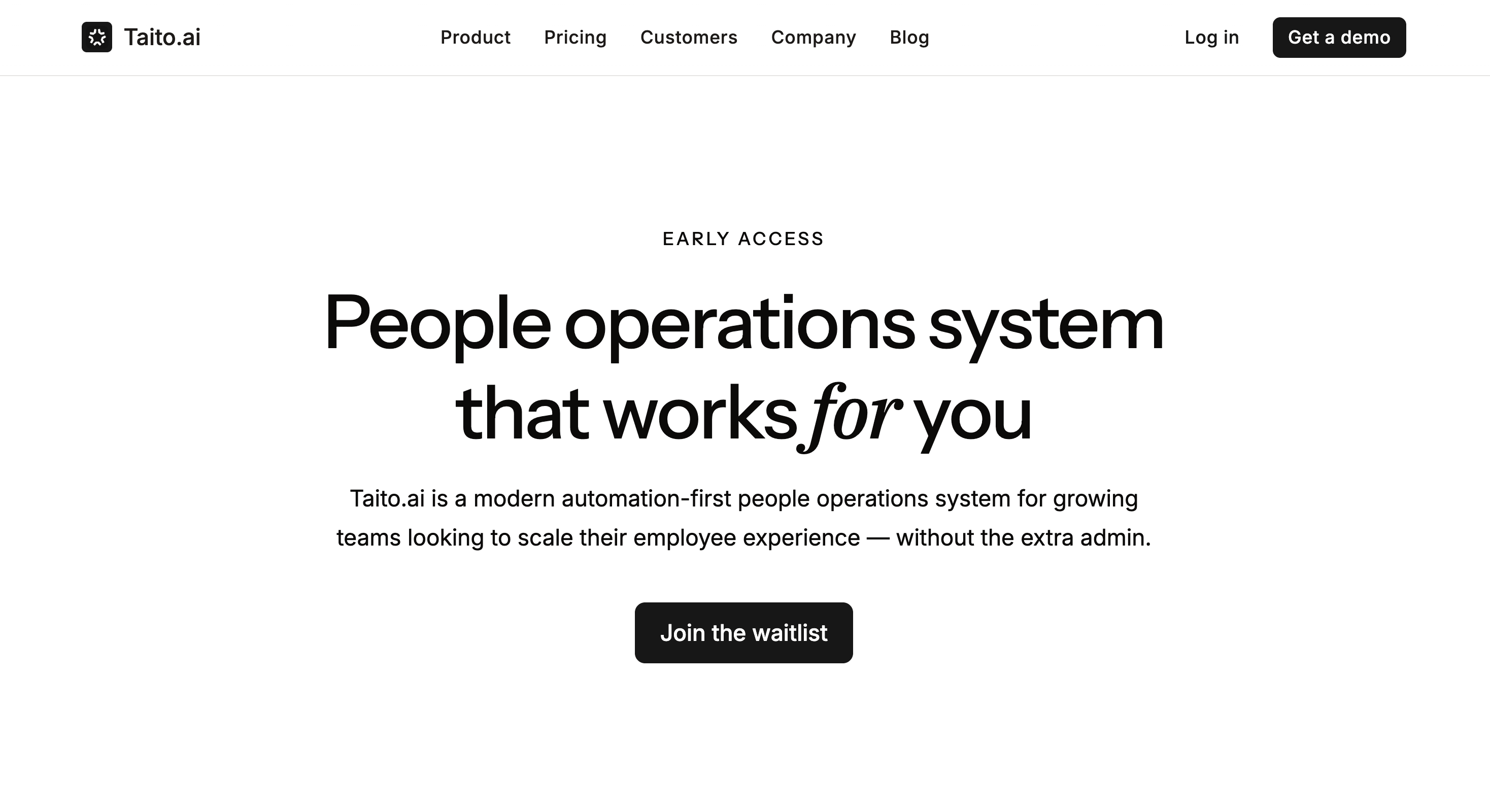
Core idea: Taito is an AI-native people ops system built for Slack-first companies at 10–75 people. Time-off, employee records, attendance tracking, and performance reviews all run through Slack, with an MCP server built in so AI tools can query your live HR data directly.
Key highlights:
- Sets up in a day — import employees from a spreadsheet, connect Slack, and core HR workflows are running before the end of the day
- Fully Slack-native: time-off requests, manager approvals, check-ins, and performance reviews all happen inside Slack without switching to a web app
- Performance management included in the base plan — not a tier upgrade or add-on
- MCP server built in: Claude, ChatGPT, N8N, or any agent in your stack can query live employee data (leave balances, org chart, headcount, performance cycle status)
- Self-serve, transparent pricing — no sales call required to get started or see what it costs
Ideal for: AI-native startups and Slack-first teams at 10–75 people who want HR infrastructure that runs where the team already works, with no implementation project.
BambooHR
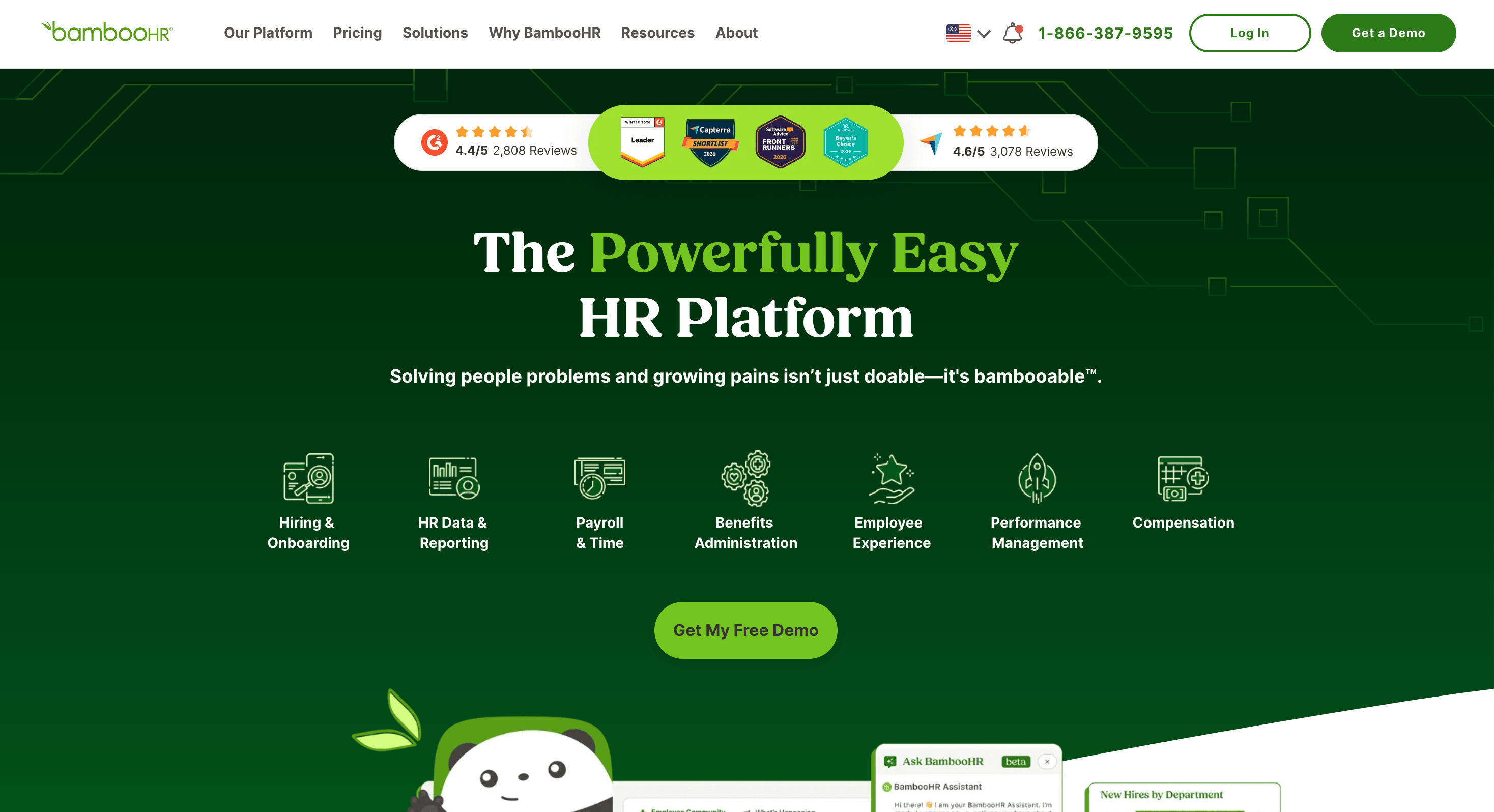
Core idea: BambooHR is the most common first HRIS for companies outgrowing spreadsheets. It consolidates employee records, PTO management, onboarding, and hiring into one place with a clean interface that works for both HR teams and employees.
Key highlights:
- Clean, intuitive UI — praised by both HR administrators and employees as easy to use from day one
- Strong centralized employee database with 150+ third-party integrations
- Automated new hire onboarding packets save significant admin time
- Mobile app handles the basics well: PTO requests and employee directory
- Performance management is available on Pro and Elite plans only — not included in the base tier
- No publicly listed pricing; a free trial is available but a sales conversation is required for a quote
Ideal for: US-based companies at 50–200 employees setting up their first proper HRIS who are comfortable running performance management separately or upgrading to a higher tier later.
Personio
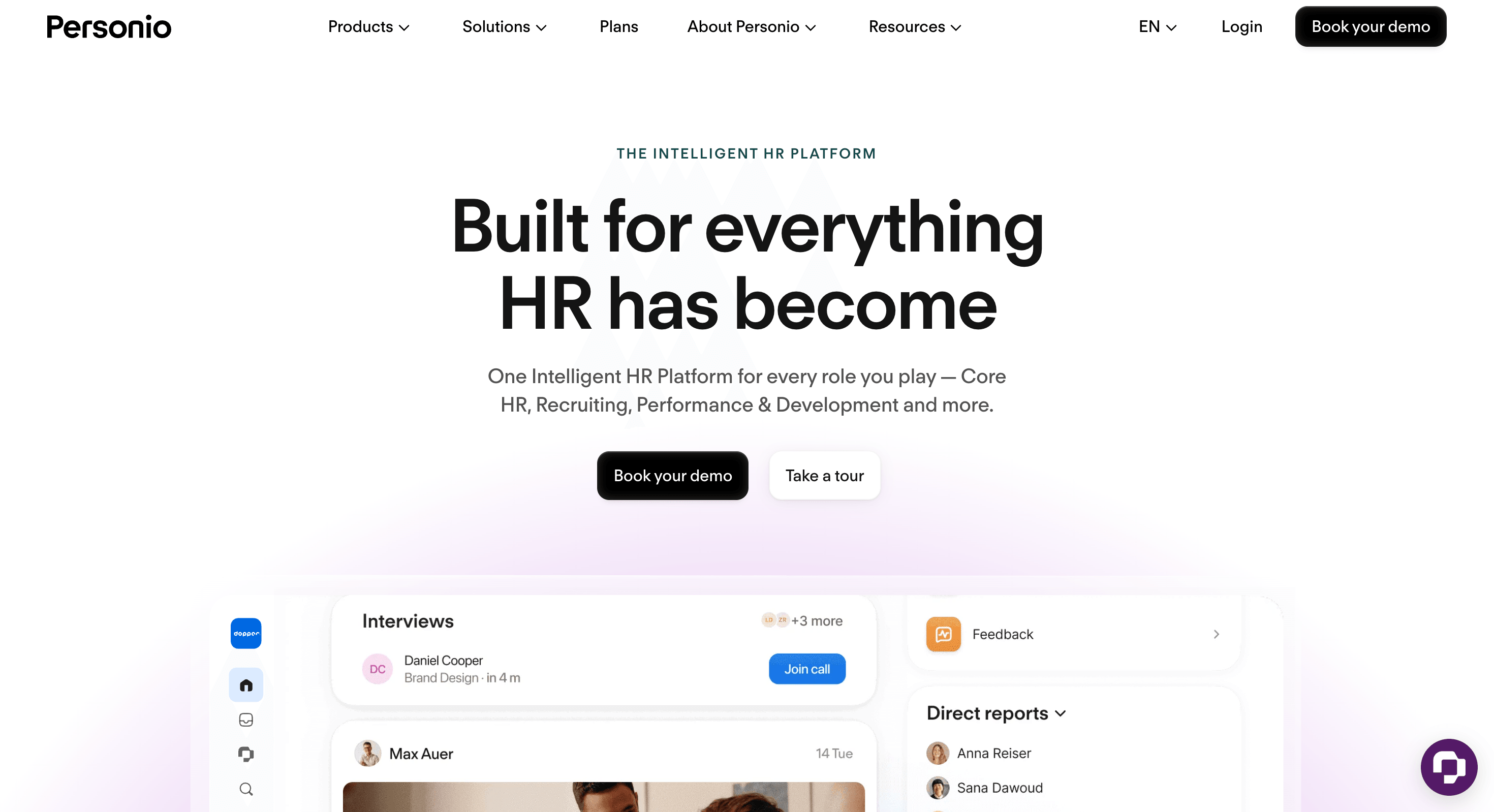
Core idea: Personio is the dominant HRIS for European SMBs, built primarily around German compliance requirements and designed to consolidate HR admin, payroll, and recruiting in one platform. Widely adopted across DACH, with growing coverage across Northern Europe.
Key highlights:
- Strong compliance coverage for DACH regulatory requirements, including payroll and absence management
- Modular structure: add on payroll, recruiting, or performance as the company grows
- Brings HR, payroll data, and recruiting into a single platform, reducing cross-system work
- Multi-country European setups are supported, though the platform is most mature for German requirements
- Performance management is available as a separate module, but consistently rated as the weakest part of the platform by users — described as difficult to configure and lacking key features such as linked goals and review cycles
- No public pricing; a demo is required before seeing any figures
Ideal for: European companies at 50–500 employees where DACH payroll compliance is the primary driver, with performance management either handled separately or treated as secondary.
HiBob
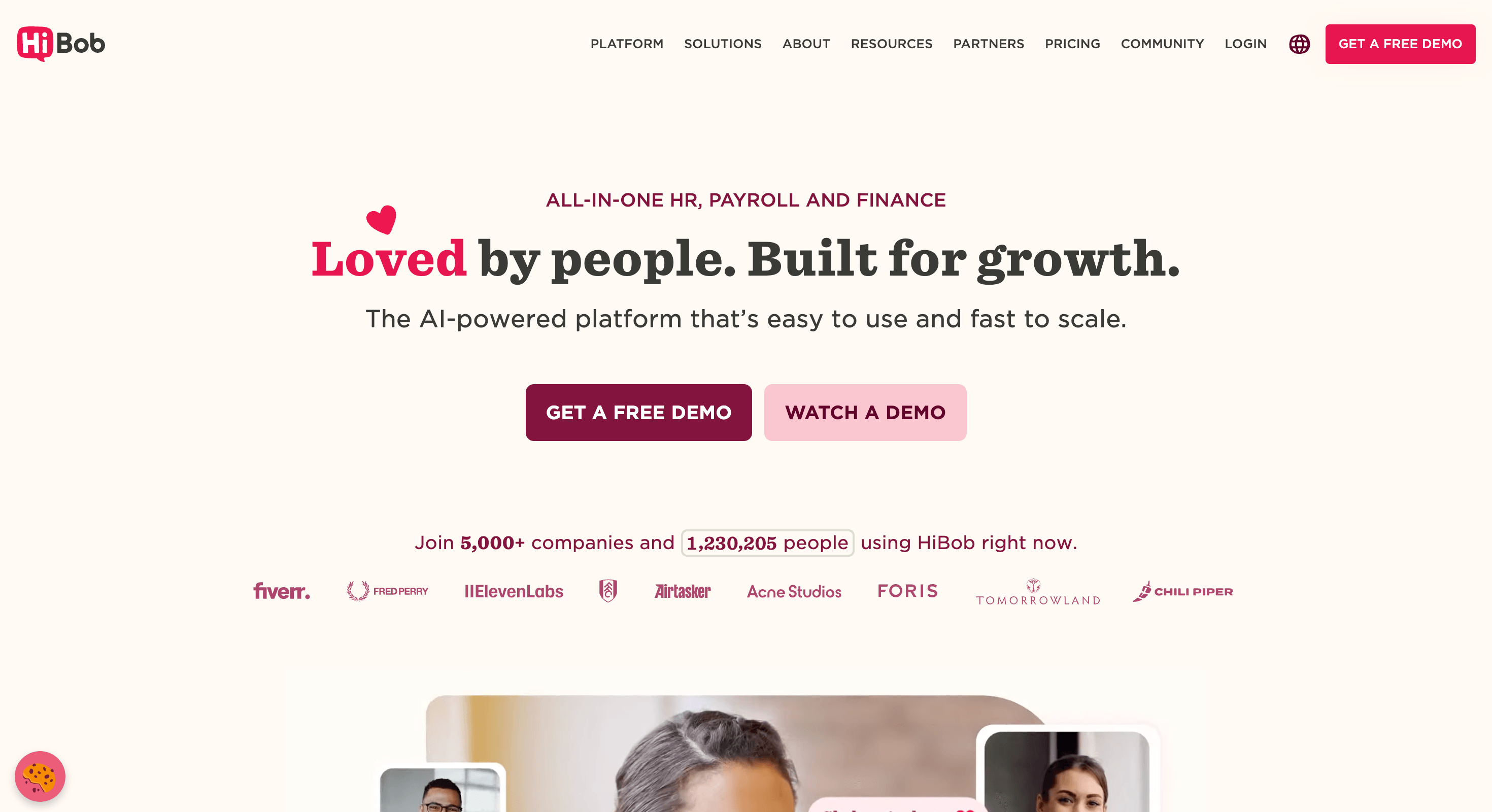
Core idea: HiBob is a modern, social-media-inspired HR platform that has become popular with tech companies. It distinguishes itself on employee experience — org charts, recognition feeds, culture surveys, and real-time analytics — and positions explicitly against legacy HR software on usability.
Key highlights:
- Modern UI that employees actually engage with, described as feeling like a social feed rather than compliance software
- Strong culture and engagement features: kudos, recognition, anonymous surveys
- Real-time people analytics with configurable dashboards
- Org chart and people directory functionality that employees find useful day to day
- Performance management (the talent module) is a separate add-on — widely described by users as requiring significant customisation and the weakest part of the platform
- No public pricing; described in user reviews as expensive for early-stage startups
Ideal for: Tech companies at 100–500 employees who prioritise employee engagement and culture features and have the budget and headcount to justify a mid-market platform.
Humaans
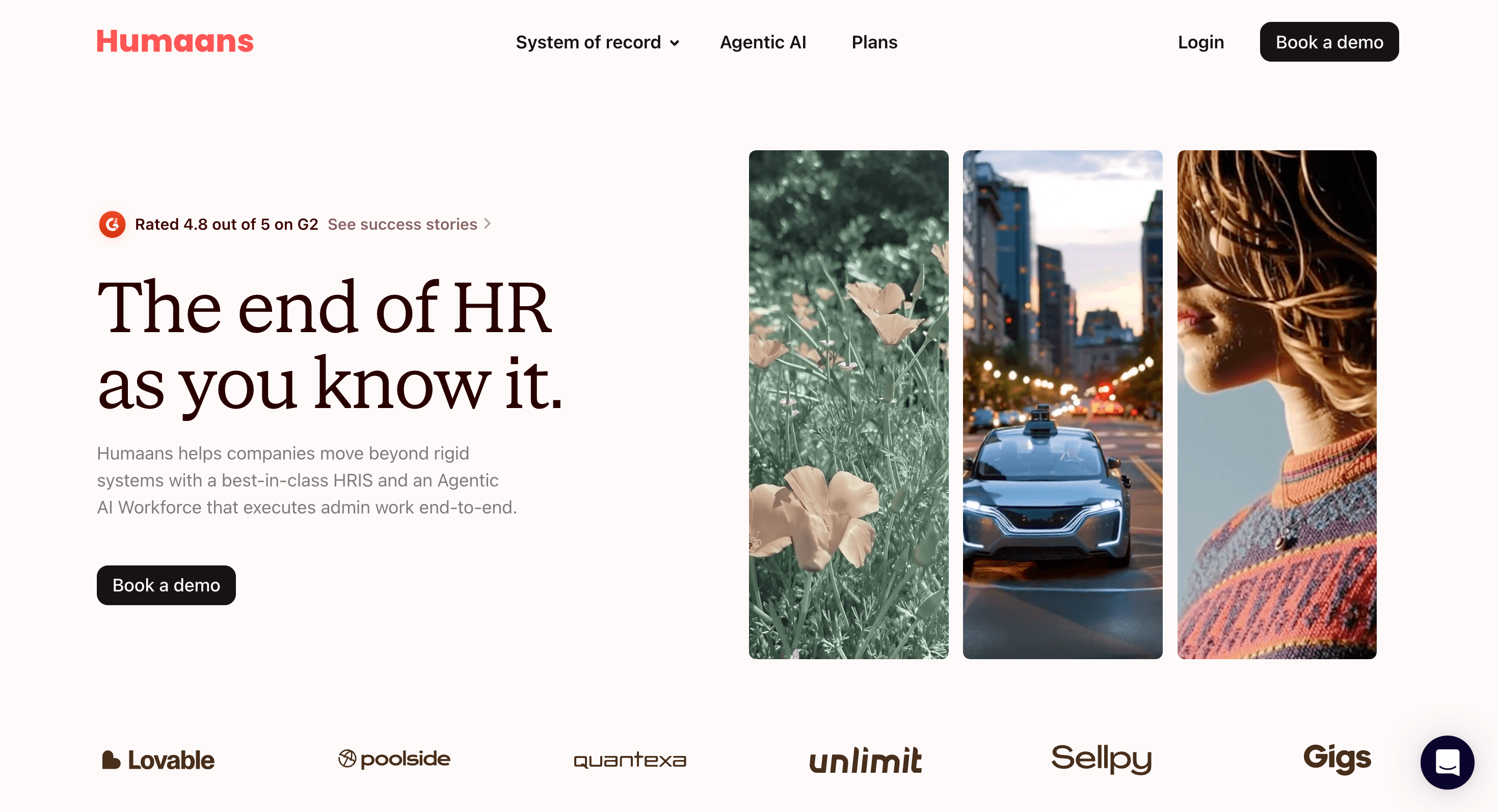
Core idea: Humaans is a clean, modern HRIS positioning itself as the foundation of a people tech stack, with agentic AI capabilities layered on top. It stands out for its time-off tracking depth, interface quality, and integrations with tools like Slack and Google Workspace.
Key highlights:
- Clean, uncluttered interface. Consistently praised for feeling as intuitive as a well-designed consumer product
- Best-in-class time-off tracking with support for 300+ national public holiday calendars
- Strong native integrations with Slack and Google Workspace
- Agentic AI features available for automating repetitive HR workflows
- Performance reviews are a paid add-on, not included in the base HRIS price
- No public pricing; custom quotes only — reviewers note the platform can feel expensive for early-stage teams relative to what is included in the base tier
Ideal for: Growing tech companies at 50–200 employees looking for a clean, well-integrated HRIS foundation, with a separate budget for performance management tooling.
Factorial
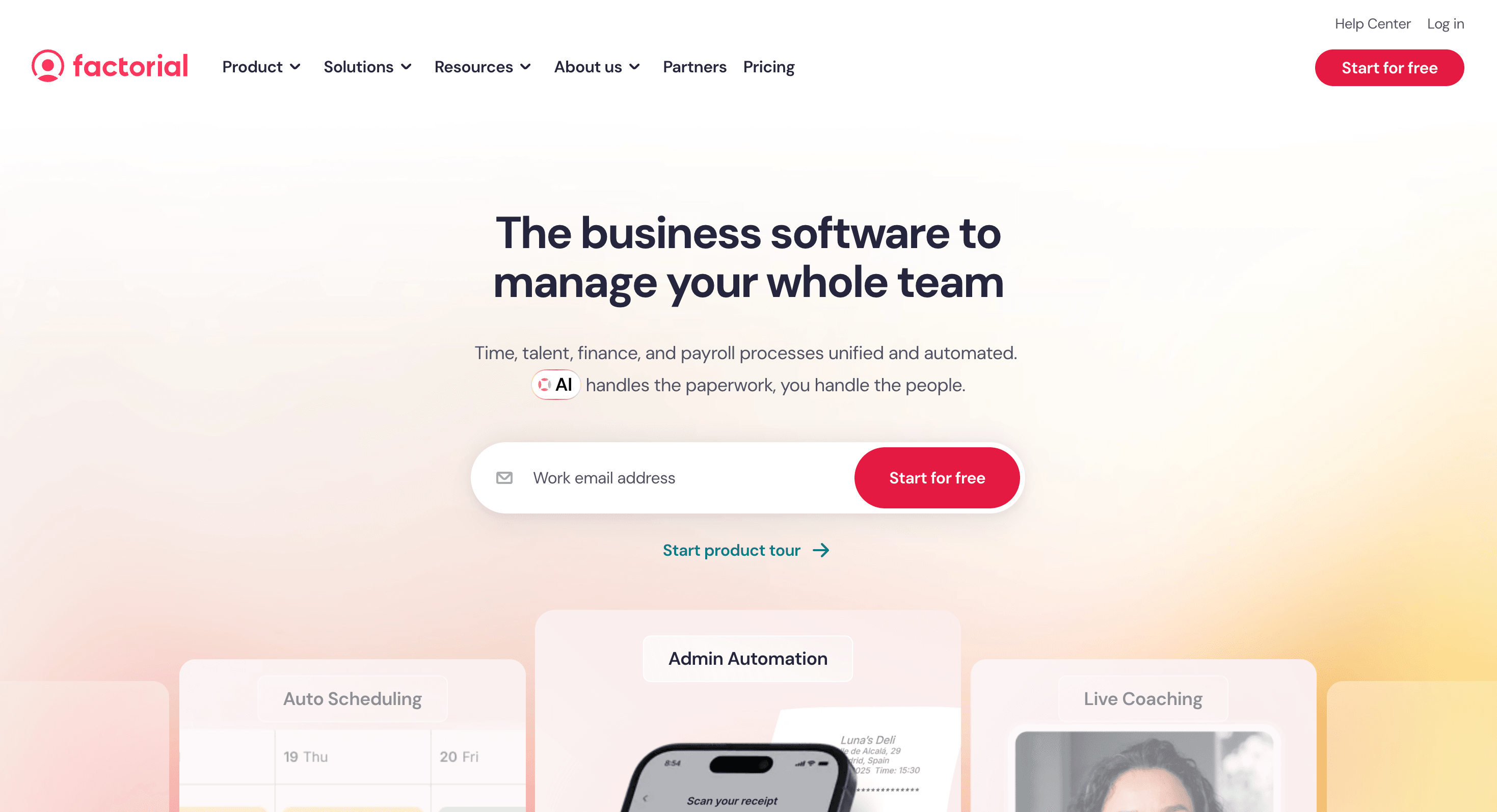
Core idea: Factorial is a European HR platform built for SMBs, with particular strength in Southern Europe (Spain, France, Italy) and growing coverage in DACH and the UK. Time-off, time tracking, employee records, onboarding, and payroll (in select markets) all sit in one platform, with a modular structure that lets companies add capability as they grow.
Key highlights:
- Strong EU compliance coverage — particularly for Spain, France, and Italy, with local payroll support in those markets
- Built-in time tracking (clock-in/clock-out) included as a core feature, relevant for EU work hour recording requirements
- Performance reviews available on higher tiers — not included in the entry-level plan
- Modular pricing structure — pay for modules as headcount and complexity grow
- Starter tier pricing is publicly listed; enterprise plans require a quote
- Slack integration available, but HR workflows are web-first — Slack is used for notifications, not as the primary interface
Ideal for: European SMBs at 20–200 employees, particularly in Southern Europe, where local payroll compliance and time-tracking regulations are the primary driver. Less compelling for companies outside Europe or those where performance management is a near-term need.
Gusto
Core idea: Gusto is the default payroll and HR platform for US-based startups. Payroll is the core product; HR features — time-off, onboarding, employee records, and benefits — are built on top of it. Setup is fast, pricing is transparent, and most teams are processing their first payroll within a day.
Key highlights:
- Best-in-class US payroll: handles federal, state, and local tax filing automatically, including year-end filings
- Self-serve setup — most teams are operational within a day, with no implementation project required
- Transparent, publicly listed pricing — no sales call needed to see what it costs
- Benefits administration included: health insurance, 401(k), workers' comp all manageable from one place
- HR features (time-off, onboarding, employee directory) are functional but secondary to the payroll core
- No performance management — a separate tool is needed for reviews, feedback, and check-ins
- US-only: not an option for companies with employees outside the United States
Ideal for: US-based startups at 5–100 employees where payroll is the primary driver and HR basics are needed alongside it. Not suitable for European companies or teams with a distributed global headcount.
Comparison
The four criteria that matter most at 10–75 people: how fast you can get started, whether Slack workflows are native or just notifications, whether performance management is included without a tier upgrade, and whether you can see pricing without talking to sales first.
| Setup time | Slack integration | Performance included | Transparent pricing | Geography | |
|---|---|---|---|---|---|
| Taito | 1 day | Native (workflows run in Slack) | ✓ Included | ✓ Self-serve | Global |
| BambooHR | 1–2 weeks | Integration only | Pro tier only | Free trial, no public pricing | US-first |
| Factorial | 1–2 weeks | Integration only | Higher tier only | Starter tiers listed | Europe |
| Gusto | 1 day | Integration only | ✗ Not included | ✓ Self-serve | US only |
| HiBob | 2–4 weeks | Integration only | Add-on | Sales call required | Global |
| Humaans | 1–2 weeks | Integration only | Add-on | Sales call required | Global |
| Personio | 2–6 weeks | None | Add-on | Sales call required | Europe |
How to choose
The right answer depends on what is actually driving the decision. Here are the four most common situations and what they point to.
- If you are under 50 people and starting from spreadsheets — prioritise setup speed. A tool that takes weeks to implement is not the right fit at this stage. Look for self-serve access and same-day setup before you commit to any contract.
- If payroll compliance in DACH or Northern Europe is the priority — Personio is built for this. Accept that the performance module is weak and plan to handle performance reviews separately.
- If your team lives in Slack — most tools offer some form of Slack integration, typically notifications or approval buttons. There is a meaningful difference between that and a tool where the full HR workflow happens natively inside Slack. Check which category a tool falls into before assuming they are equivalent.
- If you expect to need performance management within 12 months — confirm whether it is included before signing. BambooHR, Personio, HiBob, and Humaans all lock performance behind a higher tier or a paid add-on. Getting caught by this after onboarding is a common complaint.
- If your team is remote or distributed — the best HR software for remote startups is one that doesn't require employees to log into a separate web app for routine tasks. Time-off requests, manager approvals, and employee record lookups should happen where the team already works. Slack-native HR reduces friction for remote teams specifically because the HR layer lives inside the same tool used for everything else — no separate login, no context switch.
The integration question matters beyond Slack too. Research compiled from McKinsey and Deloitte shows that 47% of organisations struggle to integrate AI tools with their existing HR systems — a friction that typically starts at the HR software layer itself. Choosing an HRIS already built around the tools your team uses — Slack, Google Workspace, your payroll provider — reduces that burden before it becomes a project.
What to read next
- Should you build or buy HR tools for your startup?
- How can AI be used in HR and people functions?
- How should performance management evolve as a startup grows
FAQ
What is the best HRIS for a startup with 10–50 people?
For teams at 10–50 people, the most important criteria are setup speed and self-serve access. At this size, there is rarely bandwidth for a multi-week implementation project or an ongoing vendor relationship to manage. Taito and BambooHR both offer fast onboarding, though Taito is the only option in this list that is genuinely Slack-native and available without a sales call.
Do I need a dedicated People Lead before getting an HRIS?
No. The right HRIS reduces the need for a dedicated HR headcount rather than requiring one to operate it. At 20–40 people, the founder or an office manager typically handles people ops. A self-serve HRIS handles time-off tracking, employee records, and basic compliance without requiring an HR specialist to maintain it.
What is the difference between an HRIS and a performance management tool?
An HRIS handles the operational basics: employee records, time-off, attendance, onboarding documents, and payroll data. Performance management covers check-ins, feedback, reviews, goals, and development conversations. The two are often sold separately or combined at different price tiers — knowing which you need (and whether they can come from the same tool) is worth clarifying before you evaluate.
Which HRIS tools are genuinely built for Slack?
Most HRIS platforms offer some form of Slack integration — typically notifications or time-off request shortcuts. Very few run full HR workflows natively inside Slack, meaning the request, approval, and record update all happen without leaving the Slack interface. Among the tools reviewed here, Taito is the only one built natively for Slack.
Is Personio a good choice for companies outside Germany?
Personio works well across DACH and supports multi-country EU setups, but it is most mature for German compliance requirements. For companies based elsewhere in Europe where payroll compliance is not the primary driver, there are better-fitting options at the 10–75 person range — particularly if a clean setup experience or performance management capability matters.
What HR software has affordable plans for startups?
Most HR software hides pricing behind a sales call — BambooHR, Personio, HiBob, and Humaans all require a demo or quote request before you can see what you will pay. Taito is the exception in this comparison: pricing is self-serve and publicly listed, and you can get started without a sales conversation. If budget is a constraint at the early stage, starting with a tool that shows you what it costs upfront avoids the risk of committing time to a demo process only to find the pricing is out of range.
What is the best HR software for remote startups?
For remote startups, the most important factor is whether HR workflows happen inside the tools the team already uses — not in a separate platform that requires a separate login. Most HRIS tools offer some form of Slack integration, but there is a meaningful difference between receiving a notification in Slack and running the full workflow there. For remote teams specifically, Slack-native HR removes the context switch entirely: time-off requests, approvals, check-ins, and employee records all stay inside Slack without requiring anyone to log into an HR portal.