Blog/Case studies
How Lovable and ŌURA scale performance in the AI era
A Slush 2025 side event discussion featuring engineering and marketing leaders from Lovable and ŌURA on how teams achieve high performance in AI-native environments.
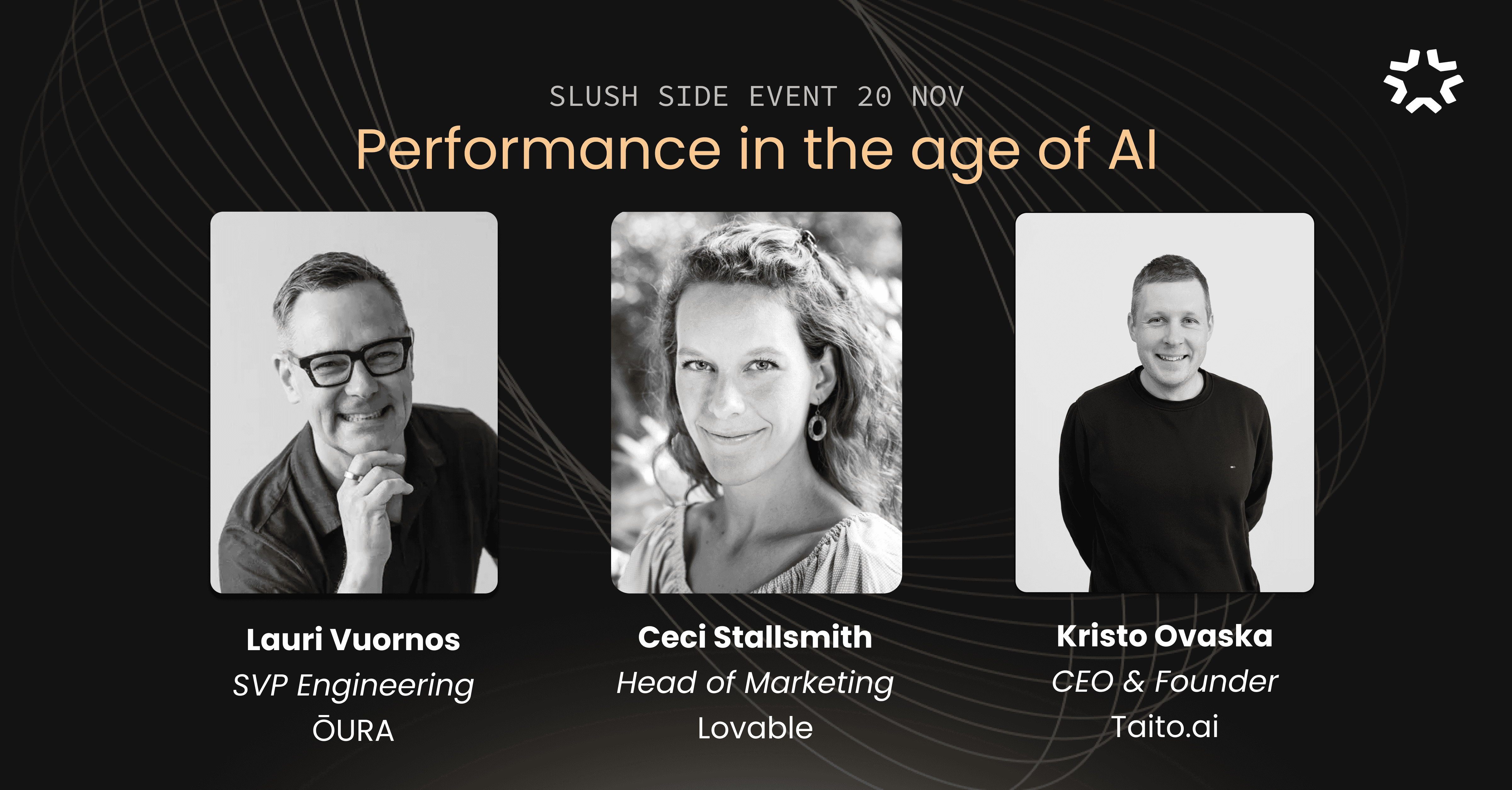
This article covers a Slush 2025 side event discussion featuring engineering and marketing leaders from Lovable and ŌURA, exploring how teams achieve high performance in AI-native environments.
Key Participants
- Kristo Ovaska – CEO & Founder, Taito.ai (moderator)
- Cecilia Stallsmith – Head of Marketing, Lovable
- Lauri Vuornos – SVP Engineering, ŌURA
Performance Through Clarity, Not Control
The core insight centers on direction-setting: performance in AI-native teams comes from clarity, not control. High-growth organizations align on direction despite weekly priority shifts by over-communicating goals rather than enforcing strict processes.
Individual Performance Foundations
Performance relies on daily habits and structured clarity. Lauri recommends identifying “the three most important things” weekly, while Cecilia emphasizes atomic habits for sustainable output rather than forcing peak daily intensity.
Team Alignment Strategies
Leaders use visual metaphors and simplified language to maintain alignment when documentation cannot keep pace. Shared context and goals become stabilizers when priorities shift rapidly. One example: treating ARR as a lagging indicator rather than a primary objective helps teams focus on meaningful work.
Environment Over Hiring Alone
While hiring talented, driven people matters, environmental design determines actual outcomes. Capable people need systems supporting learning and trust—predictability alongside psychological safety enables discretionary effort.
Performance Enablement in Practice
Enablement means helping people discover capabilities they didn’t know they possessed, not ranking performance. Cecilia acknowledges bandwidth constraints in hypergrowth settings, highlighting the need for scalable systems beyond individual coaching.
AI’s Impact on Leadership
AI hasn’t changed foundational leadership practices but raises stakes significantly. Leaders need curiosity about emerging technologies, outcome-focused thinking, and strong judgment. AI amplifies performance only when paired with clear expectations—it reduces friction, not decision-making requirements.
Systems of Action
Goals, feedback loops, and rituals create alignment supporting autonomy without micromanagement. Cecilia notes that small teams (under 100 people) now accomplish work historically requiring hundreds, possible through AI-enabled systems.
Core Takeaway
Performance in the AI era is designed through intentional systems and clarity, not demanded through pressure. Functional leaders closest to execution benefit most from well-structured environments emphasizing alignment, learning, and trust.