Blog/Guides
Leapsome alternatives: the 14 best competitors compared for 2026
The best Leapsome alternatives for 2026, compared on price, setup time, and company size. Includes what each tool is actually best at and how to migrate off Leapsome.
The best Leapsome alternatives in 2026 are Taito.ai, Small Improvements, 15Five, Lattice, Culture Amp, and Betterworks. Which one wins depends on your size and how much setup you are willing to own, not on feature count. This guide compares 14 of them on price, setup time, and best-fit company size.
TL;DR
- Cheapest to start: Small Improvements, at $3 per user per month on its entry tier, billed annually with a 20-seat minimum.
- Least setup: Taito.ai, at €10 per seat per month (€8 annual) as one tier with everything included, run from Slack rather than a new system your team has to log into.
- Best for enterprise OKRs: Betterworks, where goals cascade across departments.
- Best for engagement analytics: Culture Amp, for survey benchmarking rather than the review cycle itself.
- Under 300 people, pick working defaults over flexibility. A configurable platform nobody has time to set up is the most common way a performance tool fails.
- The usual reasons teams leave Leapsome are configuration effort, modular pricing at scale, and managers who only open the tool during review season.
What is Leapsome?
Leapsome is a people enablement platform designed to unify performance management, employee feedback, learning, and OKRs in one tool. It’s used by HR and People teams across growing organizations to drive alignment, engagement, and skill development.
Known for its flexibility and broad functionality, Leapsome helps organizations structure employee growth and goal-setting. However, it often requires configuration time and manual setup, making it best suited for teams ready to invest in a full-featured system.
Why consider Leapsome competitors?
While Leapsome provides a broad suite of features, many companies are now looking for tools that deliver faster setup, simpler user experiences, and more AI-powered automation.
Reasons to consider Leapsome alternatives include:
- Need for built-in AI to automate feedback and coaching
- Preference for faster implementation with less manual setup
- Desire for simpler pricing and scalability
- Interest in tools that provide continuous, real-time enablement
Quick decision matrix
Before diving into the full list, here’s how we compared each platform.
We evaluated each platform based on five criteria: automation depth, AI capabilities, integrations, scalability, and employee feedback quality. These factors reflect what modern HR and performance enablement teams value most in 2026.
| # | Tool | Best For | Key Strength |
|---|---|---|---|
| 1 | Taito.ai | Teams that want the cycle to run itself | Runs review cycles end to end and collects feedback in Slack |
| 2 | Small Improvements | Simplicity & low cost | Easy to use, flexible feature set, starting at $3/user/mo |
| 3 | Lattice | Full HR programs, large orgs | Broad functionality across reviews, goals, and engagement |
| 4 | Culture Amp | Engagement analytics & culture | Advanced survey analytics and benchmarking |
| 5 | 15Five | Lightweight feedback rhythm | Simple weekly check-ins with strong remote team adoption |
| 6 | Betterworks | Enterprise OKR alignment | Deep OKR alignment with enterprise compliance and security |
| 7 | HiBob | Integrated HRIS + performance | Unified HR operations and performance in one modern platform |
| 8 | Mesh.ai | Real-time AI performance insights | Personalized recommendations and feedback automation |
| 9 | Zavvy | Learning-driven growth cultures | Strong connection between learning and performance workflows |
| 10 | PerformYard | Tailored review cycles | Configurable review templates with transparent performance data |
| 11 | Mirro | Recognition & culture, SMBs | Easy-to-use interface encouraging recognition and transparency |
| 12 | Peoplebox | Startups scaling performance | AI-driven OKR recommendations with fast setup |
| 13 | Engagedly | Culture-driven orgs with diverse HR needs | Gamified performance tools combining engagement, learning, and reviews |
| 14 | Performica | People analytics & collaboration insights | AI-based organizational network analysis linking collaboration to performance |
The top 14 Leapsome competitors and alternatives in 2026
1. Taito.ai
Overview: Taito.ai is a people operations system where ready-made agents run the process rather than store the records. For performance, that means the review cycle orchestrates itself: participants, prompts and cadence are set once, and reminders, chasing and calibration prep run in the background.
Strengths:
- Review cycles that run end to end, including reminders and calibration prep
- Continuous feedback collected in Slack, so most of the team never logs into a new tool
- Reviews checked for missing peers, recency-skewed examples and inconsistent rubric use before they ship
Limitations:
- Newer ecosystem, with analytics and enterprise reporting still expanding
- Less emphasis on engagement surveys than the broader suites
Integration & Onboarding: Slack and Google Workspace, payroll systems including Xero, Fortnox and Netvisor, and applicant tracking systems including Ashby and Teamtailor; also reachable from Claude or any MCP tool. Setup takes days, not weeks.
Pricing Range: €10 per seat per month, or €8 on annual billing. One tier, everything included, no per-module charges.
Best For: Companies of roughly 30 to 300 people in the Nordics and Europe that want the cycle to run without someone owning it full time.
2. Small Improvements
Overview: Small Improvements is a lightweight performance management platform combining reviews, 1:1s, continuous feedback, and praise, designed for teams that want a flexible, easy-to-adopt tool without enterprise overhead.
Strengths:
- Very easy to use, with little training required for both admins and employees
- A flexible set of features supports performance reviews, 1:1 meetings, continuous feedback, cascading objectives, and praise
- Continuous feedback and shared 1:1 agendas that support ongoing conversations
- New Manager Activation Scores and post-1:1 ratings help surface and support managers who may be struggling
Limitations:
- Analytics and reporting are more limited compared to enterprise-focused solutions
Integration & Onboarding: Integrates with common HRIS systems and tools like Slack and Google Workspace, with fast onboarding and no implementation overhead.
Pricing Range: Low-end pricing within the category, starting at $3 per user per month on the entry tier, billed annually with a 20-seat minimum. Implementation sessions are optional and billed separately.
Best For: Smaller and mid-sized teams looking for a simple, affordable performance tool without sacrificing core review and feedback workflows.
3. Lattice
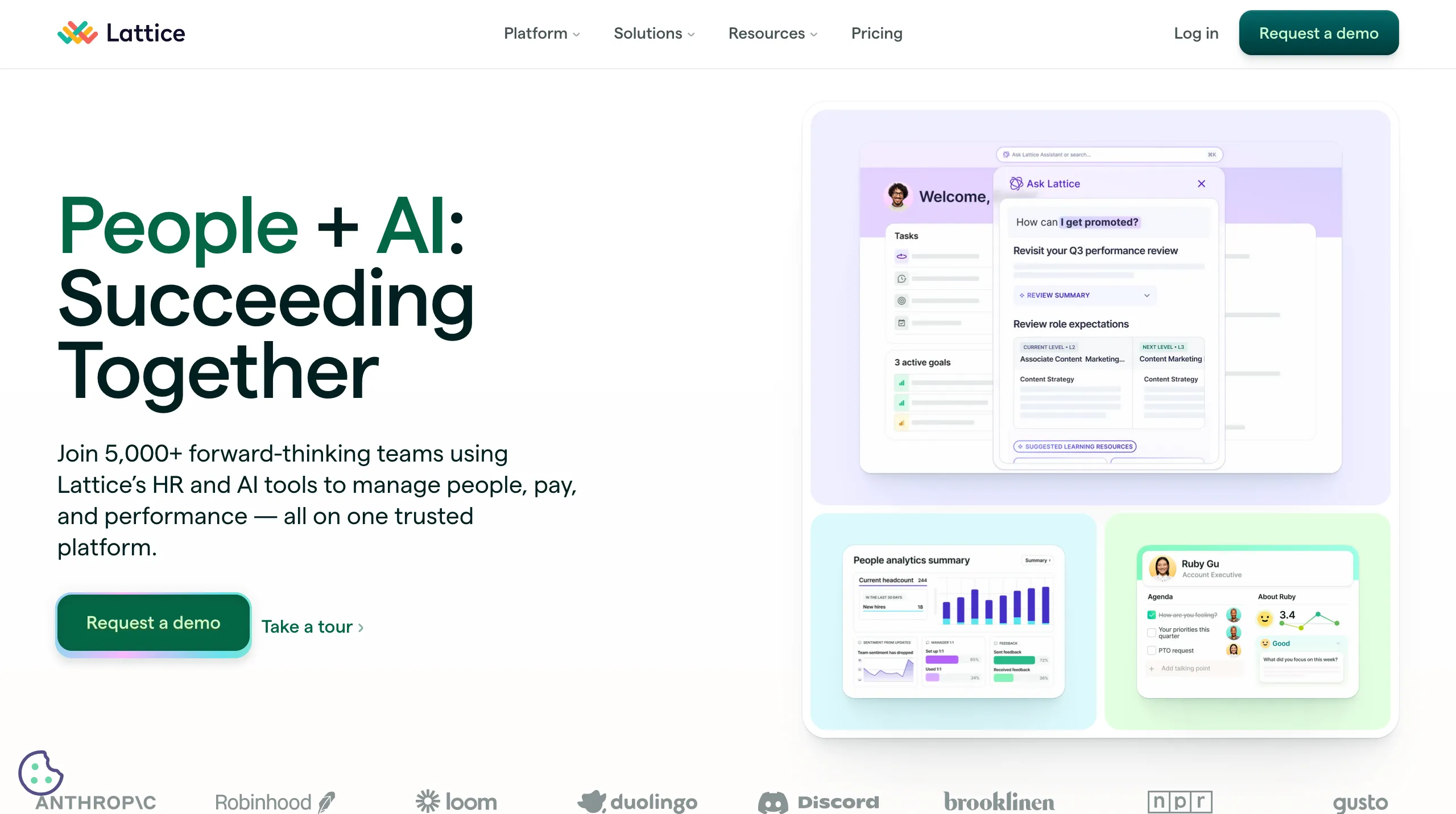
Overview: A broad people management platform combining performance, engagement, and growth tools in one suite.
Strengths:
- Broad functionality across reviews, goals, and engagement
- Customizable frameworks for large organizations
Limitations:
- Less intuitive for smaller teams
Integration & Onboarding: Integrates with HRIS and productivity tools; onboarding can take several weeks.
Pricing Range: Mid to enterprise-level.
Best For: Larger companies managing full HR programs.
4. Culture Amp
Overview: Known for engagement analytics and benchmark data, Culture Amp helps organizations connect performance and culture.
Strengths:
- Advanced survey analytics and benchmarks
- Excellent reporting tools for engagement tracking
Limitations:
- Manual configuration of review processes
- Limited automation features
Pricing Range: Mid to high range.
Best For: HR leaders focused on engagement and organizational culture.
5. 15Five
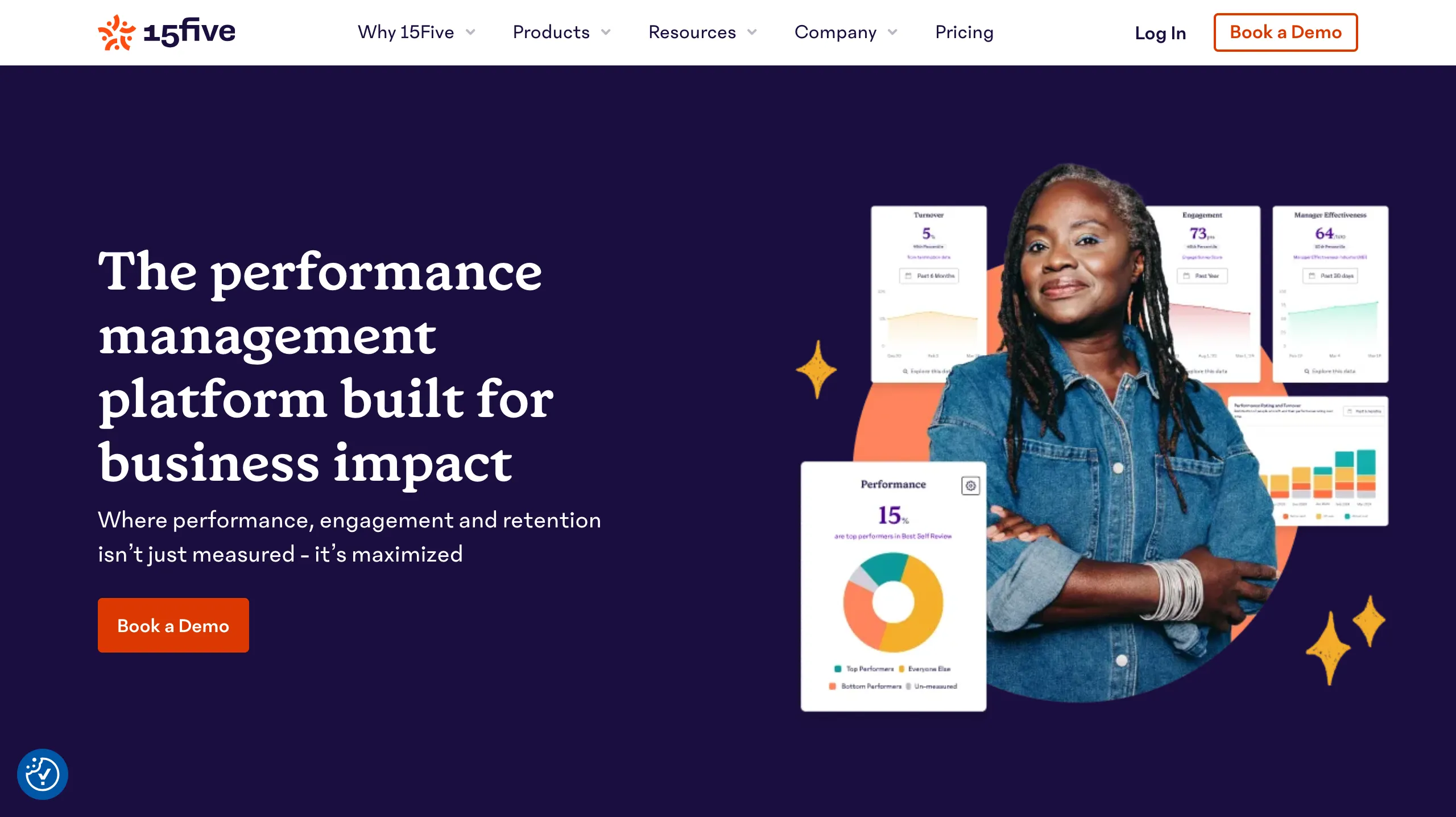
Overview: 15Five enables managers to run check-ins, feedback, and recognition through a simple, habit-forming system.
Strengths:
- Simple weekly check-ins and feedback workflows
- Great adoption across remote teams
Limitations:
- Lacks advanced OKR support
Integration & Onboarding: Slack and HRIS integrations available; onboarding in under a week.
Pricing Range: Affordable for SMBs.
Best For: Small and mid-sized teams seeking an intuitive feedback rhythm.
6. Betterworks
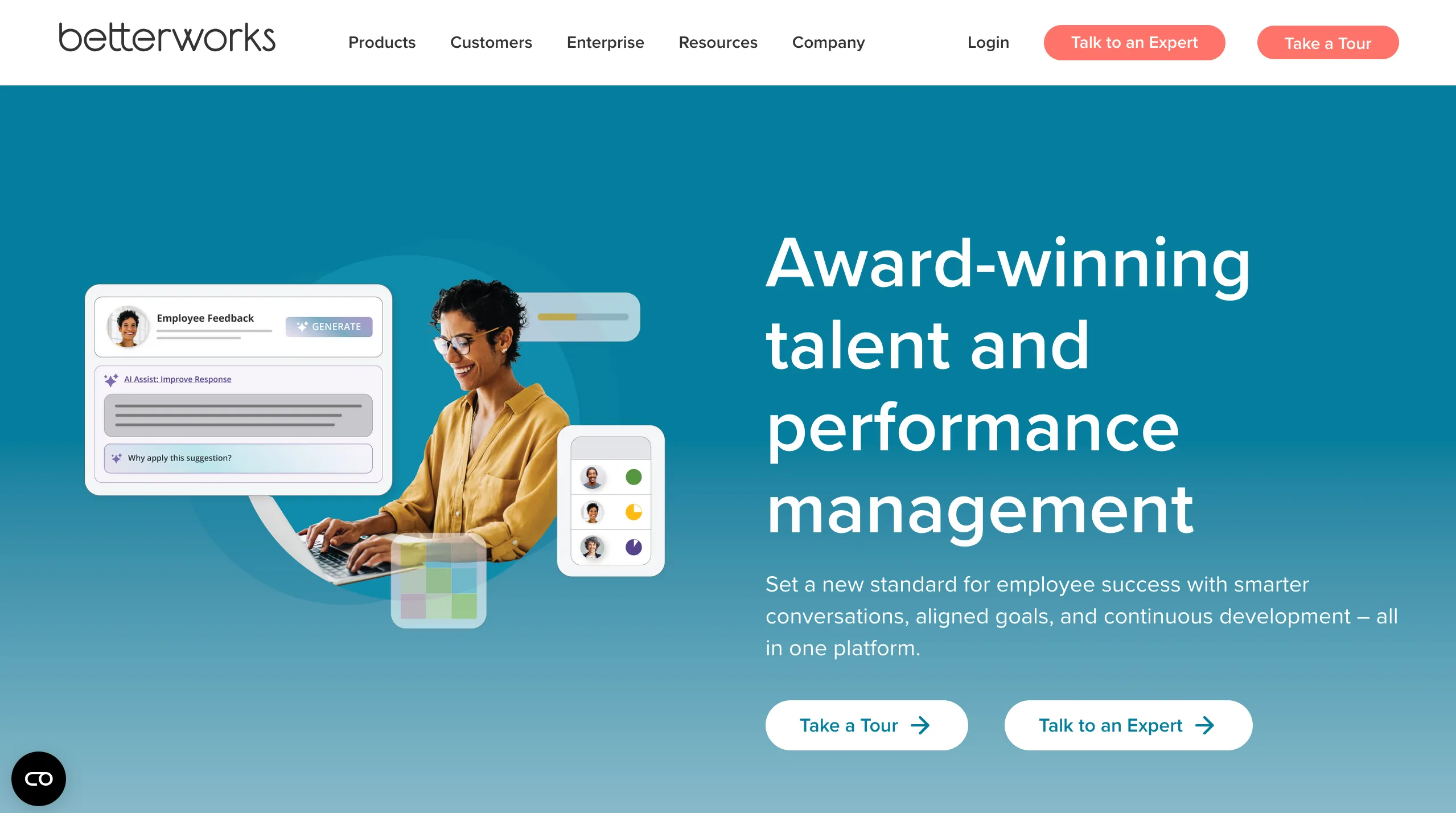
Overview: An enterprise-grade OKR and performance solution focused on goal alignment and measurable outcomes.
Strengths:
- Excellent scalability and analytics
- Enterprise compliance and security
Limitations:
- Complex setup for smaller organizations
- Higher pricing compared to mid-market tools
Integration & Onboarding: Integrates with Teams, Slack, and HR systems; setup can take several weeks.
Pricing Range: Enterprise-level.
Best For: Large organizations managing strategic OKRs.
7. HiBob
Overview: HiBob merges HRIS, performance management, and engagement tracking into one modern platform.
Strengths:
- Unified HR operations and performance modules
- Modern, user-friendly interface
Limitations:
- Requires HR admin oversight
Integration & Onboarding: Connects with HR, payroll, and recruiting platforms; onboarding takes 2 to 3 weeks.
Pricing Range: Mid-range.
Best For: HR teams seeking one integrated HR and performance system.
8. Mesh.ai
Overview: Mesh.ai combines performance, engagement, and insights powered by AI recommendations for real-time feedback and coaching.
Strengths:
- Personalized performance recommendations
- Feedback and goal automation
Limitations:
- Smaller integration ecosystem
- Analytics tools still maturing
Integration & Onboarding: Integrates with Slack and HR systems; setup within a few days.
Pricing Range: Mid-range.
Best For: AI-forward organizations prioritizing real-time performance insights.
9. Zavvy
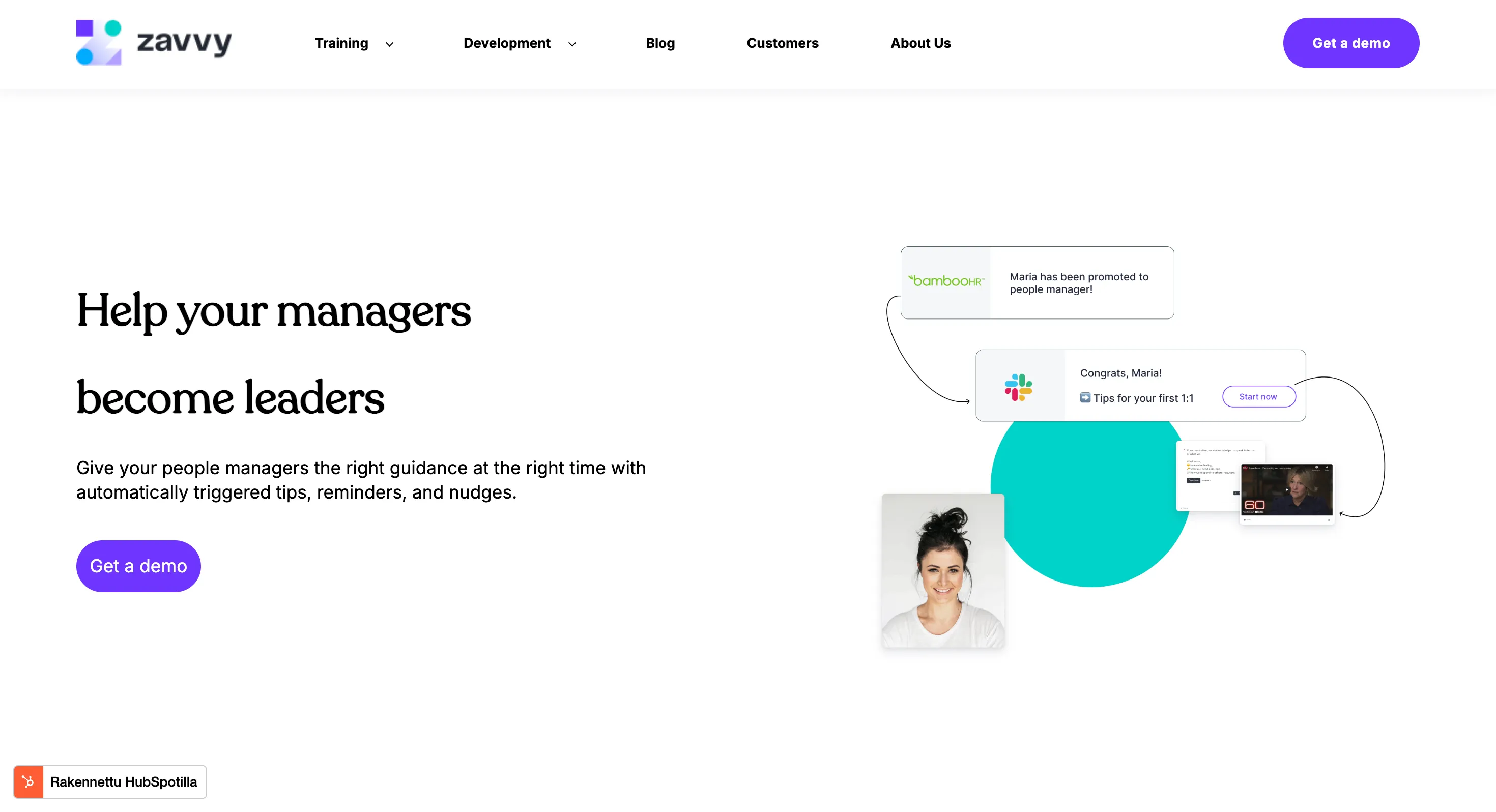
Overview: Zavvy connects learning and performance into structured employee growth journeys, linking reviews, feedback, and development.
Strengths:
- Strong connection between learning and performance
- Easy-to-customize workflows
Limitations:
- Smaller customer base
Integration & Onboarding: Slack and Google Workspace integrations; guided onboarding.
Pricing Range: Mid-range.
Best For: Learning-driven teams building growth cultures.
10. PerformYard
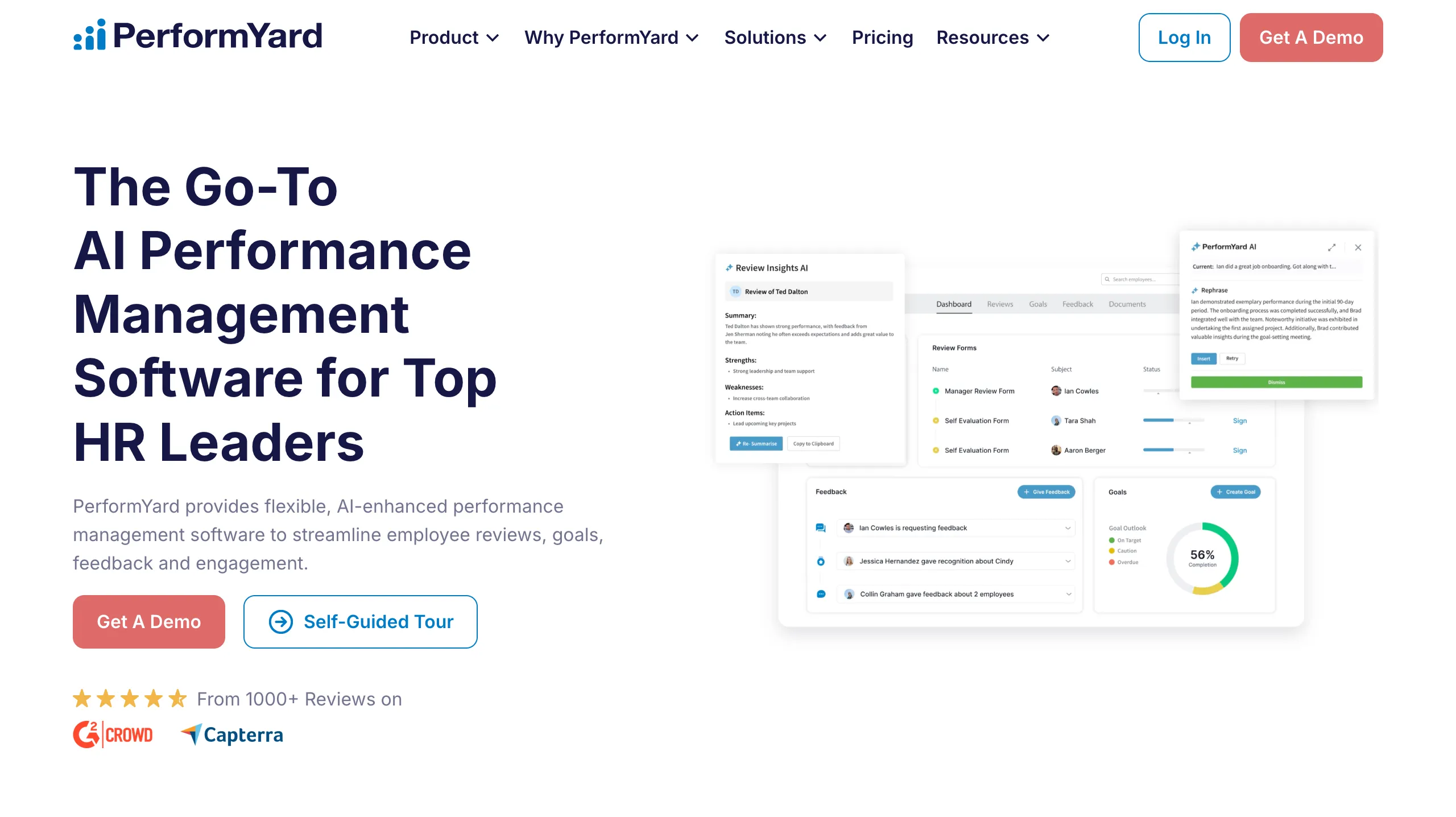
Overview: PerformYard offers configurable performance review workflows designed for mid-sized companies and service-oriented teams.
Strengths:
- Configurable review templates
- Transparent performance data
Limitations:
- No built-in AI functionality
- Limited real-time feedback automation
Integration & Onboarding: Integrates with HR systems and SSO; guided onboarding.
Pricing Range: Mid-range.
Best For: Teams needing tailored review cycles.
11. Mirro
Overview: Mirro is a recognition and performance tool that simplifies feedback and fosters engagement.
Strengths:
- Easy-to-use interface
- Encourages recognition and transparency
Limitations:
- Limited OKR tracking
- Basic analytics
Pricing Range: Affordable.
Best For: SMBs prioritizing recognition and culture.
12. Peoplebox
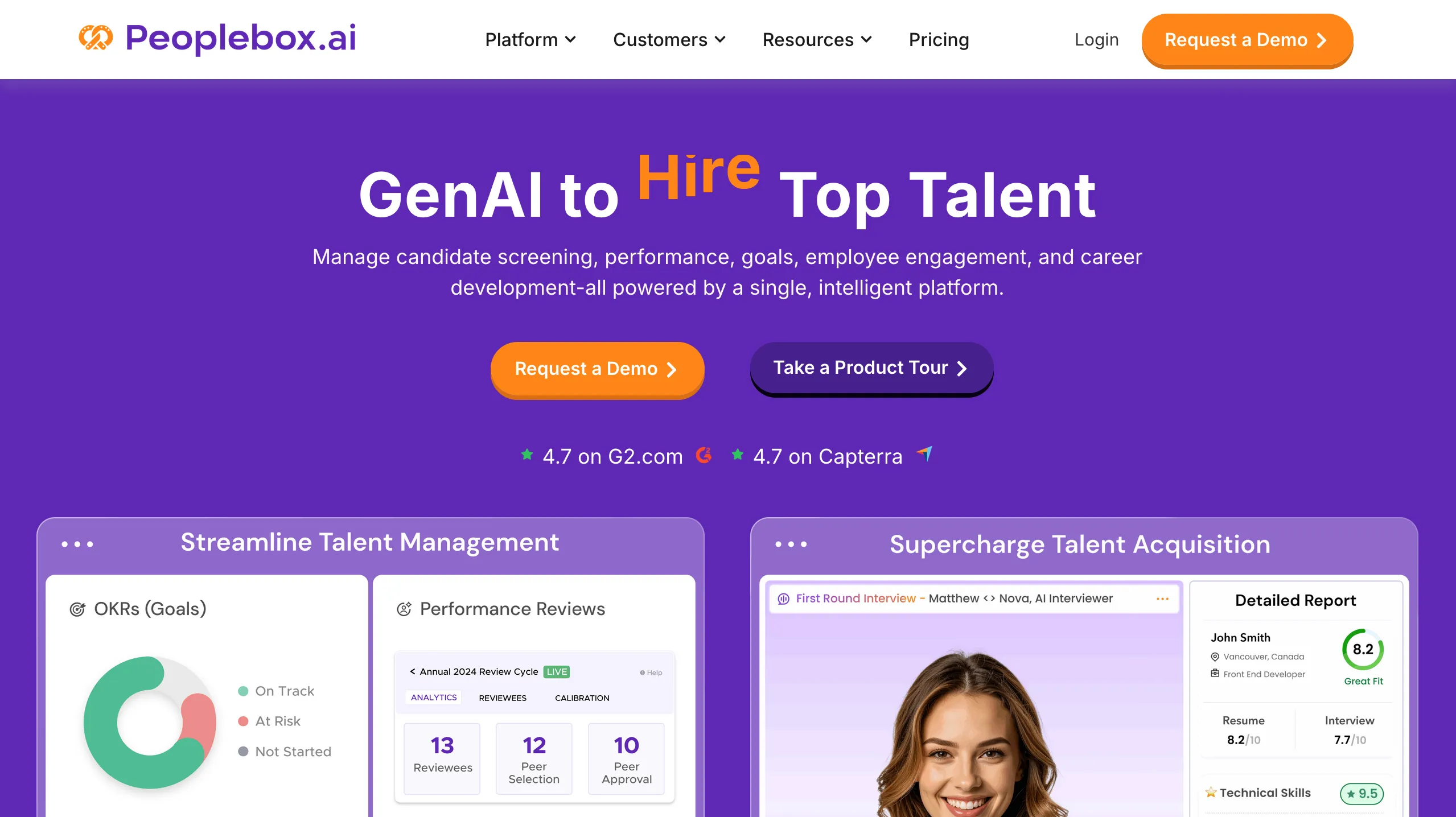
Overview: Peoplebox automates OKRs and performance workflows, built for fast-scaling startups.
Strengths:
- AI-driven OKR recommendations
- Simple dashboards and flexible setup
Limitations:
- Limited analytics
Pricing Range: Affordable and startup-friendly.
Best For: Growing tech companies scaling performance management.
13. Engagedly
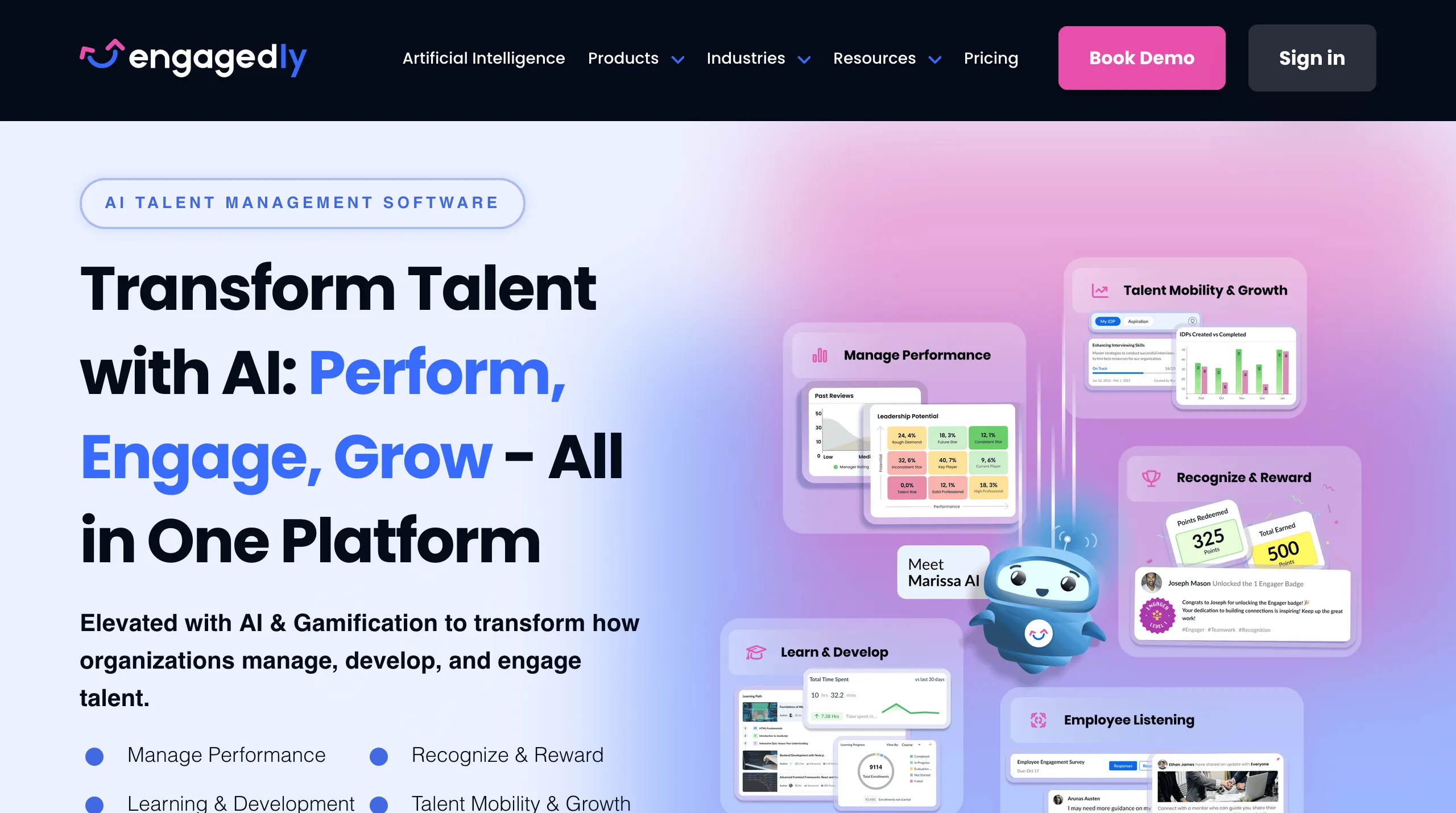
Overview: A people management suite that combines engagement, recognition, and learning management.
Strengths:
- Gamified performance tools
- Supports engagement, learning, and reviews
Limitations:
- Interface complexity for smaller companies
Integration & Onboarding: Connects with Teams, Slack, and HR tools; guided onboarding.
Pricing Range: Mid-range.
Best For: Culture-driven companies with diverse HR needs.
14. Performica
Overview: Performica is an AI-driven people analytics and performance platform that identifies collaboration patterns and team impact. It helps HR leaders understand influence networks and productivity drivers.
Strengths:
- AI-based organizational network analysis (ONA)
- Connects engagement data with team performance
- Reveals high-impact contributors and relationships
Limitations:
- Suited for data-mature organizations
Integration & Onboarding: Works with HRIS and communication tools like Slack, Teams, and Google Workspace; onboarding takes 2 to 3 weeks.
Pricing Range: Mid- to high-range, depending on analytics depth.
Best For: Data-driven HR teams seeking to link collaboration insights with performance outcomes.
Which Leapsome alternative fits your company size?
Company size decides this more reliably than any feature comparison, because it determines who is available to own the system.
| Size | What changes | Where to look |
|---|---|---|
| Under 50 | Nobody owns the tool full time. Adoption is the only real risk. | Small Improvements, Mirro, Taito.ai |
| 50–200 | First formal cycles. Managers need structure but not configuration. | Taito.ai, 15Five, Small Improvements |
| 200–500 | Review workflows start differing by function. Reporting matters. | PerformYard, Taito.ai, Lattice |
| 500+ | Cascading goals, permissions and audit requirements dominate. | Betterworks, Lattice, PerformYard |
At 200 people, the deciding question is whether anyone owns the system full time. If not, pick working defaults over flexibility. A configurable platform nobody has time to set up is the most common way a performance tool fails. If you do have a dedicated HR operations person and varied workflows across departments, PerformYard is built for that and Lattice becomes reasonable.
At 500 employees, the configurability that felt like overhead earlier starts paying for itself. Betterworks is strongest where goals cascade across departments, Lattice covers the widest set of HR programs in one suite, and PerformYard is the most configurable for review workflows that differ by function. Lightweight tools can be stretched to this size, but you will meet reporting and permission limits — better to know that before the cycle than during it.
Check headcount bands against your next twelve months, not your current org chart.
How do you replace Leapsome?
Export your data first, then cut over at a cycle boundary rather than mid-cycle.
Leapsome access ends with the contract, and review history is the part teams miss most once it’s gone. Pull reviews, goals, feedback and competency frameworks before you cancel anything.
- Export while you still have access. Review history, goals, feedback, competency frameworks.
- Pick the next cycle as the cutover. Migrating mid-cycle means running two systems of record for the same reviews.
- Keep the export as a read-only archive. Most teams never need historical reviews inside the new tool, and skipping the import saves mapping one platform’s rating scale onto another.
- Budget two to four weeks between signing and the first cycle. Manager communication reliably takes more effort than the data move.
The step teams skip is the third one. Importing history sounds thorough and usually produces a rating scale that means something different from the one it was recorded on.
Recap: which is the best Leapsome alternative for us?
- Best for a cycle that runs itself: Taito.ai
- Best for enterprise OKRs: Betterworks
- Best for lightweight feedback: 15Five
- Best for HR integration: HiBob
- Best for learning and growth: Zavvy
- Best for analytics and people insights: Performica
- Cheapest entry price: Small Improvements
Leapsome remains a strong all-in-one platform, and the teams happiest on it are the ones with someone to configure it. If that person doesn’t exist at your company, the alternatives above that ship with working defaults will get you a running cycle faster than the more flexible options will.
Pricing and feature details above were checked in September 2026. Vendors change both, so confirm the modules you actually need before comparing quotes.
How does Taito.ai compare to Leapsome?
See how Taito.ai compares to Leapsome: review cycles that run end to end, continuous feedback collected in Slack, and one tier at €10 per seat with everything included. Get access to Taito.ai by joining our waitlist.